The short answer
You likely need a new AC if your system can't keep up on hot days, needs frequent or major repairs, or keeps leaking refrigerant. We size the new system to your home, explain your repair and replacement options, and check which utility rebates apply to your address before you decide.
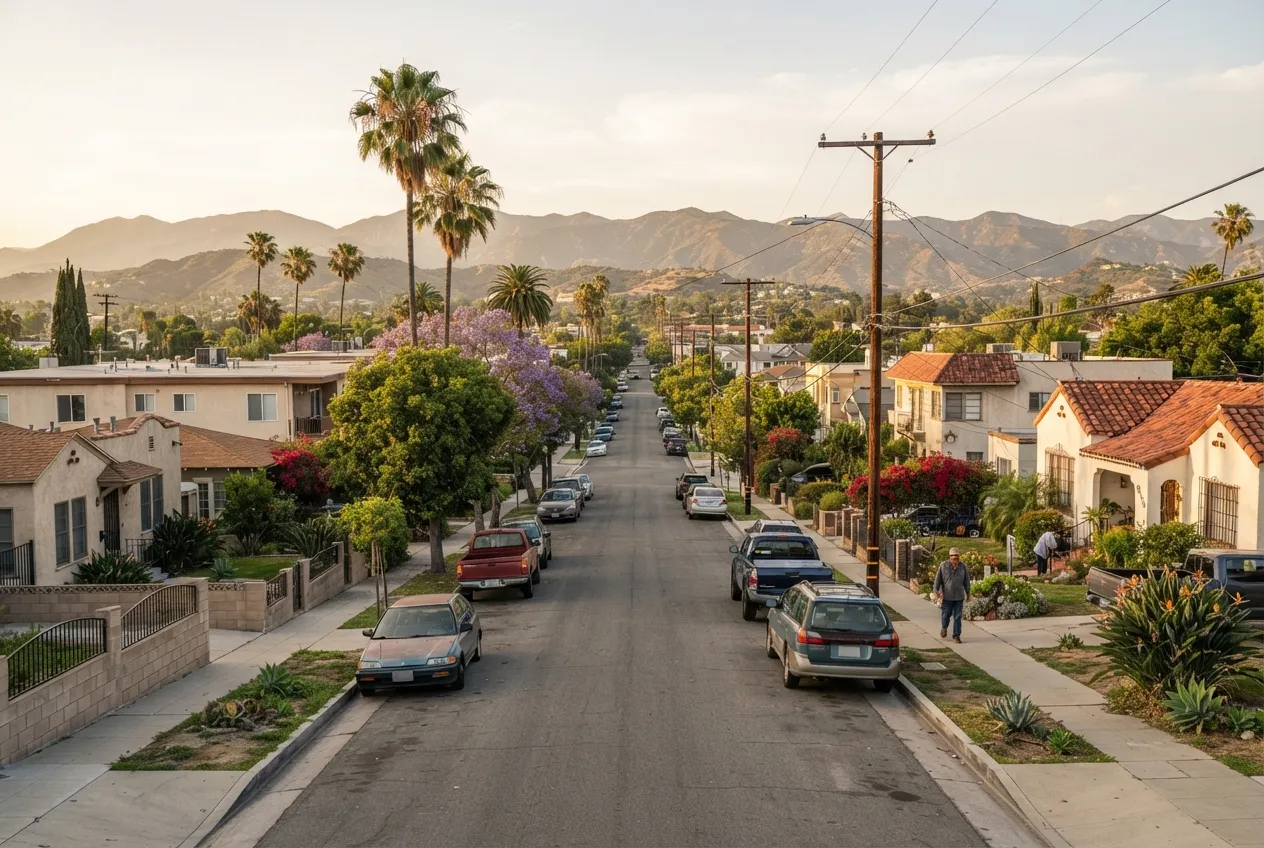
A new air conditioner is a big decision, and in Los Angeles the right choice depends a lot on where you live. A home in the San Fernando Valley or San Gabriel Valley works much harder in July than a house a few miles from the beach. Fall Santa Ana winds can also bring hot, dry spells after most people have stopped thinking about cooling. Liberty HVAC Services installs central air conditioners, heat pumps, and ductless systems for homeowners in Los Angeles and nearby cities. This page covers how to tell when replacement makes sense, what we look at before recommending equipment, what affects the cost, and what to expect from the visit.
Signs It's Time for a New Air Conditioner
Most systems show warning signs well before they quit. If you notice several of these, have the system evaluated before the next heat wave rather than during it.
- The system runs for long stretches, but rooms never reach the thermostat setting.
- Repairs are becoming routine, especially on major parts like the compressor or coil.
- Your summer electric bills keep rising even though your habits haven't changed.
- Some rooms are much warmer than others, or upstairs is noticeably hotter than downstairs.
- The outdoor unit is loud, rattles, or trips the breaker.
- Refrigerant leaks keep coming back after being repaired.
- Your home has no central air, and window units can't keep up on hot inland days.
What We Check Before Recommending a System
We don't size a new system by copying the old unit's label. An undersized unit runs nonstop on hot afternoons. An oversized one cools in short bursts, leaves the air feeling clammy, and wears out parts faster. Before we recommend anything, we look at the house as a whole.
We also ask how you use the house. A home office that gets afternoon sun or a converted garage may need its own solution, such as a ductless unit, rather than a bigger central system.
- Square footage, ceiling heights, insulation, and the size and direction of your windows
- Ductwork condition, including leaks, crushed or disconnected runs, and duct sizing
- The electrical panel and the circuit that serves the outdoor unit
- Space and clearances for the outdoor unit and the indoor coil or air handler
- Your existing furnace or air handler, and whether it can pair with a new outdoor unit
- Thermostat location and wiring
- Hot spots, cold spots, and any comfort complaints you've noticed
Repair or Replace: Your Options
Not every struggling AC needs to be replaced. If the system is otherwise in good shape and the problem is a capacitor, fan motor, contactor, or a single accessible leak, a repair is usually the sensible choice. If that's the case, we'll tell you.
Replacement makes more sense when the system is older, uses a refrigerant that is being phased out, needs a major component like a compressor, or has broken down repeatedly. When it's time to replace, you generally have these options:
Many Los Angeles homeowners choose heat pumps because our mild winters suit them well. If you're also replacing a gas furnace, keep in mind that South Coast AQMD Rule 1111 limits NOx emissions from gas furnaces sold and installed in the region. The district has also been amending the rule toward zero-emission requirements. Because the district sets and revises the compliance dates, we check the current rule before recommending a gas furnace.
- A new central air conditioner matched to your existing furnace, if the furnace is in good condition
- A full system replacement, with a new outdoor unit, indoor coil, and furnace or air handler installed together
- A heat pump, which handles both cooling and heating with one outdoor unit
- Ductless mini-splits for homes without ducts, additions, or individual rooms
What Affects the Cost of AC Installation
Every installation is quoted for the specific house, so you'll get a written estimate after the evaluation. These are the main factors that drive the cost:
- System type: central AC, heat pump, or ductless
- Capacity, based on the load calculation for your home
- Efficiency rating (SEER2, plus HSPF2 for heat pumps)
- Whether the existing ductwork can be reused, needs repairs, or needs to be replaced
- Electrical work, such as a new circuit, disconnect, or panel upgrade
- Access: attics, tight side yards, crawlspaces, and rooftop units take more labor
- Permits and inspections required by your city
- Thermostat upgrades and add-ons like air filtration
Rebates and Incentives
Available rebates depend on which utility serves your address. LADWP residential electric customers can apply for Consumer Rebate Program rebates on qualifying heat pump systems. The rebate amount is based on the unit's SEER2/HSPF2 rating. You file the application after the equipment is purchased and installed, within 12 months of purchase, so keep your paperwork.
Many homes outside the City of Los Angeles are served by Southern California Edison instead, and the available offers are different. We confirm the current rebate for your address before including it in a quote. Also note that the federal Energy Efficient Home Improvement Credit (25C) only covered qualifying heat pumps placed in service before December 31, 2025. It does not apply to new installations now.
How an Installation Visit Works
The first visit is an in-home evaluation. A technician walks through the house, inspects your current equipment and ductwork, takes measurements, and asks about any comfort problems. We then explain your options and give you a written estimate that lists the equipment and the work included.
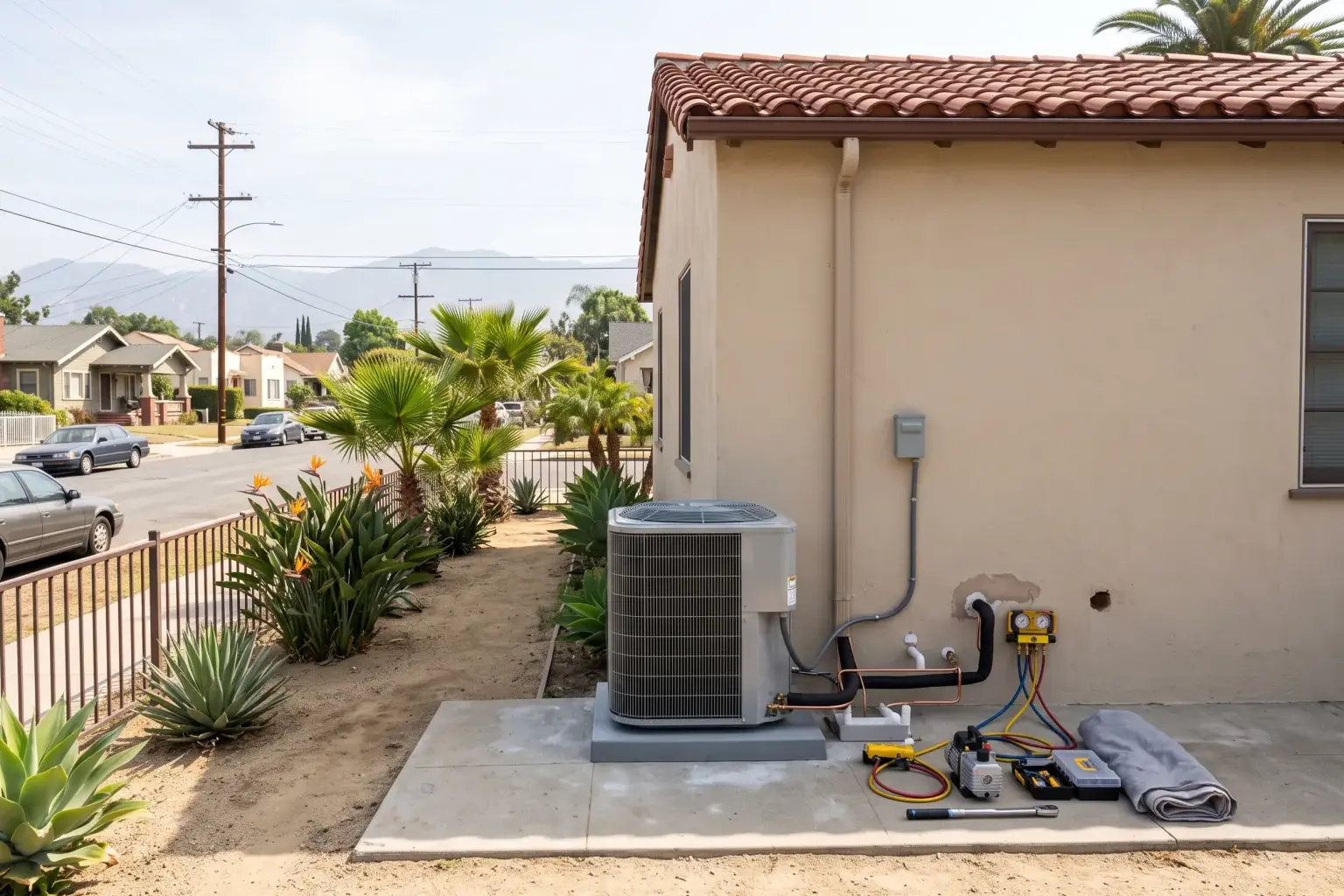
On installation day, the crew protects floors and work areas, recovers refrigerant from the old system, removes the old equipment, and sets the new outdoor unit and indoor components. A straightforward replacement often takes about a day. New installations, duct replacements, and electrical upgrades can take longer, and we'll give you the expected timeline up front.
Before we leave, we pressure-test and evacuate the refrigerant lines, charge the system, check airflow and temperatures at the vents, and set up your thermostat. We'll show you how to change the filter and handle basic care, and we'll arrange the permit inspection where one is required.
AC Installation by city
- AC Installation in West Hollywood
- AC Installation in Beverly Hills
- AC Installation in Culver City
- AC Installation in Inglewood
- AC Installation in Santa Monica
- AC Installation in Hawthorne
- AC Installation in Vernon
- AC Installation in Huntington Park
- AC Installation in El Segundo
- AC Installation in Burbank
- AC Installation in Manhattan Beach
- AC Installation in Maywood