The short answer
HVAC maintenance is a scheduled inspection, cleaning, and tune-up that keeps your air conditioner, heat pump, or furnace running safely and efficiently. In Los Angeles, the best timing is spring for cooling and fall for heating, before the hot months and the first cold nights.
Heating and cooling systems in Los Angeles have an uneven workload. Inland neighborhoods and the valleys can run much hotter in summer than areas near the coast. Fall Santa Ana winds can bring hot, dry spells after the season seems over. Then the furnace or heat pump sits mostly idle through a mild winter until a cold night calls on it. Routine maintenance finds worn parts, dirty coils, and loose connections before they become a no-cooling call during a heat wave. Liberty HVAC Services provides maintenance visits for central air conditioners, heat pumps, gas furnaces, and ductless systems in Los Angeles and nearby cities.
Signs Your System Is Due for Maintenance
If you can't remember the last time someone looked at your system, it's probably time. Some symptoms also suggest a problem is already starting. Catching it during a maintenance visit is usually simpler than waiting for a breakdown.
Call for a visit if you notice any of the following:
- Rooms take longer to cool down on hot afternoons, or the system runs almost nonstop
- Airflow from the vents feels weaker than it used to
- Some rooms are noticeably warmer or cooler than others
- New noises such as rattling, buzzing, squealing, or grinding
- Short cycling, where the system turns on and off every few minutes
- Water pooling near the indoor unit or furnace
- A musty, dusty, or burning smell when the system starts up
- Electric or gas bills creeping up with no change in how you use the system
- Ice on the refrigerant lines or the outdoor coil
What We Check During a Maintenance Visit
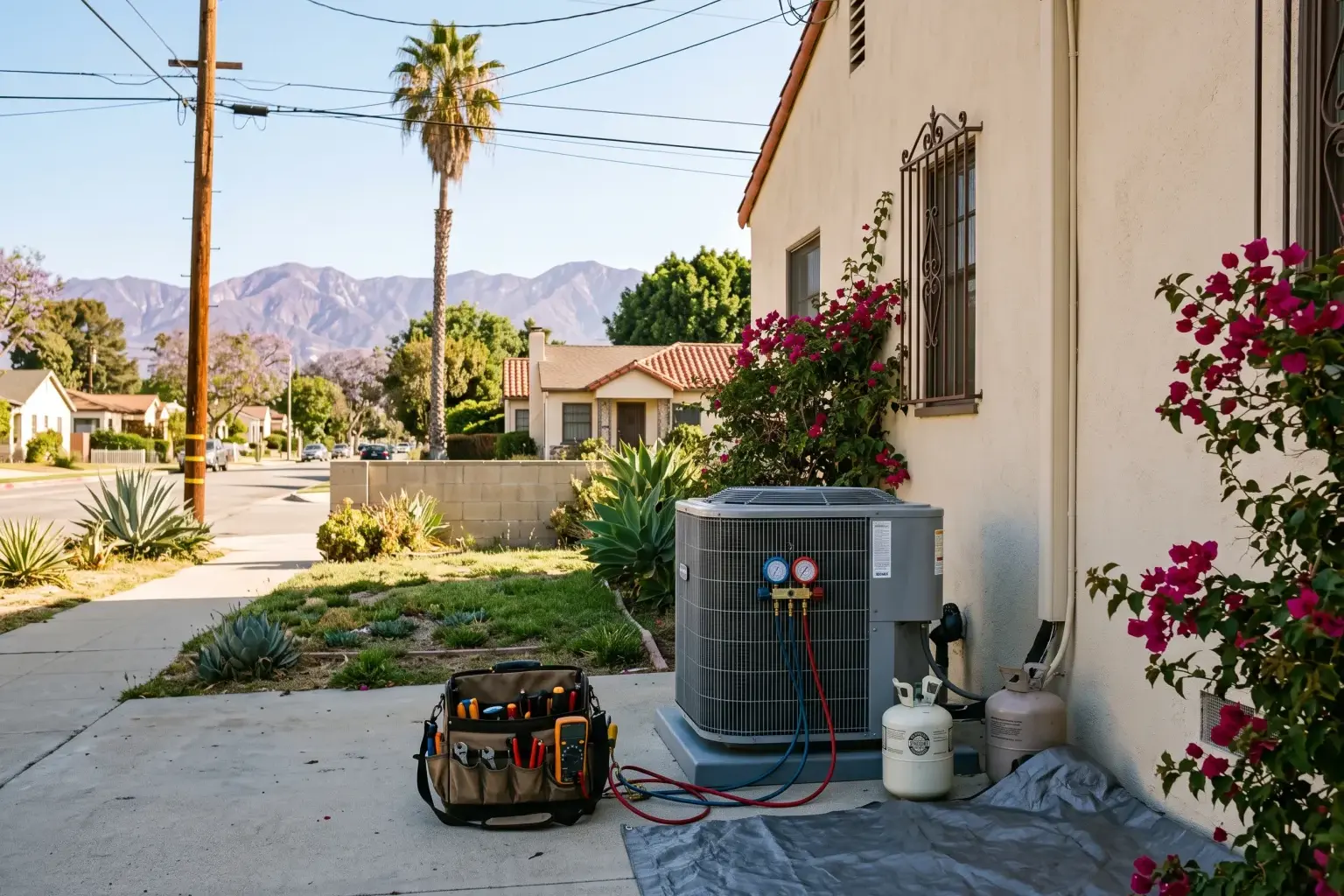
A maintenance visit covers the whole system, not just the thermostat and filter. The exact checklist depends on whether you have a central AC with a furnace, a heat pump, or a ductless system. A typical visit includes:
- Thermostat operation and settings, so the system responds when it should
- Air filter condition, with a replacement or a recommendation for the right size and type
- Outdoor condenser coil, cleaned of dust, leaves, and debris that block heat transfer
- Indoor evaporator coil and blower, checked for dirt buildup that restricts airflow
- Refrigerant pressures and temperatures, to spot a possible leak or charge problem
- Electrical connections, capacitors, and contactors, which often wear out first in hot weather
- Condensate drain line and pan, cleared to help prevent water leaks and overflow
- Fan motors and belts, checked for wear, noise, and proper speed
- On gas furnaces: burners, flame, ignition, flue venting, and the heat exchanger area, with attention to signs of combustion or carbon monoxide problems
- Accessible ductwork, checked for disconnected sections or obvious air leaks
Repair or Replace: What Happens When We Find a Problem
Most maintenance visits end with a cleaner, better-running system and a short list of notes. Sometimes we find a part that is failing or a larger issue. When that happens, we explain what we found and what your options are. You decide whether to go ahead.
Small repairs like a weak capacitor, a clogged drain line, or a worn contactor usually make sense to fix right away. Bigger problems, such as a refrigerant leak in an aging coil, a failing compressor, or a cracked heat exchanger, deserve a closer look. We weigh the system's age, its repair history, its efficiency compared with current equipment, and how comfortable your home actually is.
If replacement is on the table, a few local rules matter. South Coast AQMD Rule 1111 limits NOx emissions from natural-gas furnaces sold and installed in the Los Angeles region. The district has been amending it toward zero-emission requirements and sets its own compliance dates. Anyone planning a furnace replacement should check the current rule.
Heat pumps can qualify for utility rebates. LADWP residential electric customers can apply for Consumer Rebate Program rebates on qualifying heat pump systems, with the amount based on the unit's SEER2 and HSPF2 ratings. You apply after purchase and installation, within 12 months of buying the equipment. Many homes outside the City of Los Angeles are served by Southern California Edison instead, so available rebates depend on your utility. We confirm the current offer before quoting it. The federal 25C tax credit for heat pumps applied only to systems placed in service before December 31, 2025. It is not available for new installations.
What Affects the Cost of Maintenance
Every home is different, so the cost of a visit depends on what we're working on and what we find. The main factors are:
- The type and number of systems, such as a single central AC versus an AC plus furnace, a heat pump, or several ductless heads
- How long it has been since the last service and how dirty the coils and blower are
- Access to the equipment, such as an attic, crawlspace, rooftop, or tight side yard
- Whether you need parts like filters, capacitors, or a drain line cleaning beyond the standard visit
- Whether you want both heating and cooling checked in one visit or seasonal visits
- Any repairs you choose to approve after the inspection
How a Maintenance Visit Works
You schedule a time that works for you. Spring is ideal for cooling, especially in inland areas and the valleys. Fall is ideal for heating, ahead of the first cold nights. Before the technician arrives, it helps to clear a path to the indoor unit and outdoor condenser.
On site, the technician asks about any symptoms you've noticed, then inspects, tests, and cleans the system. If something needs attention, we show you what we found and explain the options in plain terms before doing any extra work. Nothing beyond the agreed visit happens without your approval.
At the end, you get a rundown of the system's condition, any parts to watch, and practical tips like how often to change your filter. Most homeowners find that one or two visits a year keep their systems ready for heat waves, Santa Ana spells, and the occasional chilly winter night.